Enroll in our Fall 2026 courses!
French & Italian News
French in the Community
Tuesdays and Thursdays - 10:00-10:50AM in 1040 LCLB. Study of the various cultures, practices, perspectives, and influences of French, starting with French in the Americas and zooming in onto French in our local community of Urbana-Champaign — past, present, and future. This theoretical exploration is complemented with 20 hours of mandatory, guided, in-field experiential learning in our community (e.g., Le Cercle Francophone, the Center for Refugees, Reading Across America, French Dual-Immersion programs in Yankee Ridge or Stratton Academy).
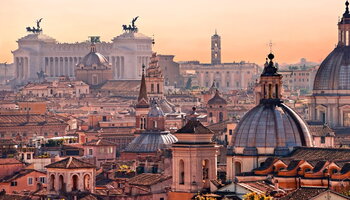
Exploring Rome: History and Culture of the Eternal City
Tuesdays and Thursdays, 11:00-12:20PM, 124 Burrill Hall. This course will focus on the role of Paris in French culture through literature, art, and film. We will consider the city of Paris from its earliest beginnings to the modern era, as a physical, social, and symbolic reality. Through literature, art, and film we will explore the ways in which Paris is at the center of French political and intellectual life. Additionally, close attention will be paid to historical and political developments and their representation. All readings are in English and the course is conducted in English. Satisfies University General Education Requirement for Western Cultures (Cultural Studies).
Europe and the Mediterranean
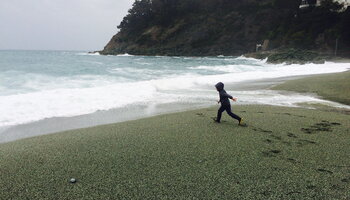
Tuesday and Thursdays 12:30-1:50PM in 429 Armory. Welcome to Europe and the Mediterranean: This course examines a paradox. Mediterranean geography and climate have encouraged movement, specialization, commerce, and cultural exchange. However. limited and unevenly distributed resources—including land, water, food, energy, and safe passage—have also produced conflict, conquest, and exclusion.Across the semester, we will ask how people have attempted to govern this interdependence through hospitality, treaties, commercial law, empire, common markets, borders, and environmental cooperation. Our recurring question: When interdependence is unavoidable, which institution governs it—and whose interests does that institution protect?
Seminar in Francophonie
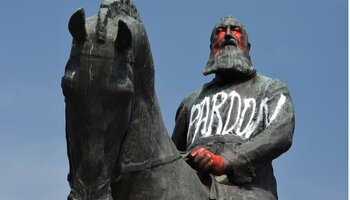
Wednesdays 3:00-4:50PM in 2142 LCLB (FRIT Library). Postcolonial Memory in Contemporary Belgian Literature: With the independence of Congo in 1960 ended Belgium’s colonization and exploitation of Central Africa that lasted three quarters of a century. The colonial experience constitutes a major chapter in modern Belgian history and left an indelible mark on the young state’s collective memory. We will explore the major shifts in postcolonial memory that have occurred since the early 2000s in Belgian literature on both sides of the linguistic divide and examine if and how the Belgian treatment of the colonial experience differs from that in French, Dutch, and other literatures. Texts by François Emmanuel, Amélie Nothomb, In Koli Jean Bofane, Marie-Louise Mumbu, David van Reybrouck, and Gaea Schoeters among others. Primary and most secondary readings in French. Class discussion in French.